Saturday, March 12, 2016

9 ways to train your brain and become smarter & happier


brain
Editors Note: This is our 50th article. Thanks to all who have been along for the ride with us so far. Heres to more!
Scientists have said for years that humans are only using 10% of their brain power. I’ve always had a fascination on how I could get the most out of my brain. Over the past few months I’ve tried various things to help improve my brain functions and help me become smarter. Granted I’m not a genius and probably never will be, but these are a few ways that I have attempted to improve my knowledge. Try them out for yourself.

Lumosity

lumosity
Lumosity is an online gaming service that you can use to “improve your brain performance and live a better life.” I started using Lumosity about a week ago and I love it. Once you sign up, you personalize your daily brain workout schedule based on what you want to improve. You can focus on everything from memory to problem solving. You train your brain by playing simple games geared toward what you want to work on. It’s pretty simple and straightforward, but really does give your brain a pretty good workout. Lumosity also keeps track of your progress and shows you your strengths, while improving your weaknesses. Lumosity is free, but you can sign up for the paid version for more detailed analytics and tracking.

Reading

reading
This is the age old tip for becoming smarter. When you were a young child, you read all the time. Once you got to your teens or became an adult you probably stopped though. Reading is beneficial for your brain for brain because it helps you process new information. It exercises your eyes and trains your brain to decrypt things better. Reading will exercise your left and right brain whether it’s fiction, non-fiction, instructional or a comic book. Reading will also help with your vocabulary and grammar.

Discuss & Debate

debate
Discussing and debating with others in a healthy manner about a mutual topic can strengthen your ability to think faster and apply your knowledge to a verbal situation. Obviously it is good to know about what you’re debating so try to go into it with some decent knowledge. The good thing about debating is you gain another perspective on a topic that you might not have seen before. It is always important to keep it cool in a debate though. You can’t always win or lose a debate, so go into one with the goal of gaining more knowledge.

TED Talks

ted
TED talks are a great way to gain insight on pretty much any topic from some of the brightest minds in the world. TED has thousands of videos available for free on their site. They can be thought provoking, mind blowing, inspirational and motivational. It’s all in what you’re in the mood for. Try watching one TED Talk a week to increase your knowledge.

Khan Academy

khan
Khan Academy is an incredible free online service that allows you to take courses on pretty much any subject you want. Math, science, economics and history are all there, with a vast amount of other courses. Similar to Lumosity, Khan Academy will keep track of what you’re learning and help you improve upon your weaknesses. This is a great service that offers an incredible amount of learning potential. Whether you just want to learn something new or use it to supplement your current schooling, Khan Academy is worth looking into.

Sleep

sleep
Sleep is your best friend and worst enemy. Personally, I feel sleeping is such a drain on the short amount of time you have in your life, 1/3rd according to a lot of studies. Sure you can accomplish more things without sleep, but are you accomplishing them effectively? Sleep is great to allow your brain and body to recharge. Get plenty of sleep so you’re not constantly running on fumes every waking moment. Having a rested mind and body will help you accomplish your tasks more effectively and will allow you to focus better on problem solving.

Physical Exercise

exercise
That’s right, physical activity will help improve your brain functionality. I hate it as much as the next person, but it really does help. Physical activity will increase your heart rate and pump more oxygen to your brain, allowing for growth of brain cells. I run on occasion and when I do, everything in the world goes away for a bit and it gives me some much needed time to clear my head. It sucks, I know but once you’re in the habit you’ll love it. I just joined a gym today, so I’m hoping to work on my physical health to promote improvement of my mental health. Give it a try with me and see how it works.

Teach Others

teaching
You can improve upon your current skills and knowledge by sharing it with others. When someone asks you about something you’re knowledgeable on, see it as an opportunity to re-teach yourself about it. When you teach someone, you’ll have to go back to basics and help someone understand the topic at the most basic level. This will allow you to pick up on any flaws you have along the way and help you learn how to learn new things better in the future.

Don’t Stop Learning

432911267_640
Society will deem “continuing education” as going to college after high school, or going back to college for a masters degree. Continuing education is the constant pursuit of knowledge. Knowledge is power, cliche but true. Why stop learning when you graduate high school or college? Continue to learn, become smarter and spread knowledge. It will only improve your own life and those around you.

Saturday, March 5, 2016

a simple kitchen pantry recipe for weight loss and detox???!!!


 If you try this, please let me know how you fare on the weight loss and how you feel about the detox aspect too.  michael@grasselhypnotherapy.com.au
 
 Thanks!


Home » Natural Remedies » Recipes » You are reading »

How To Flush Out Toxins In 2 Days and Burn Fat With Incredible Speed

This amazing method will help you lose about 3-4 kg per day without starving or strict diet regimes.
Detoxification processes can be enhanced by vegetables and drinks.
You should, however, try and making some drinks, when you’ve got more free time.
How-To-Flush-Out-Toxins-In-2-Days-and-Burn-Fat-With-Incredible-Speed
Here are some of them:
Ingredients:
  • 1 teaspoon of ginger
  • 1 tablespoon of maple syrup
  • 2 tablespoons of lemon juice
  • 300 ml of water
Preparation:
Blend all the ingredients until you get a homogenous mixture.
Drink the mixture in the evening, before bedtime.

Metabolism Activating Juice
Ingredients:
  • 2 tomatoes
  • 6 tablespoons of lemon juice
  • 4 garlic cloves
  • 500 ml of water with ice cubes
Preparation:
Blend all the ingredients together. Drink this remedy on an empty stomach, in the morning.
As an addition, you should make sure to take a lot of green tea without sugar and consume fresh vegetables and grains regularly!
Source: http://www.naturalmedicinebox.net

Saturday, January 23, 2016

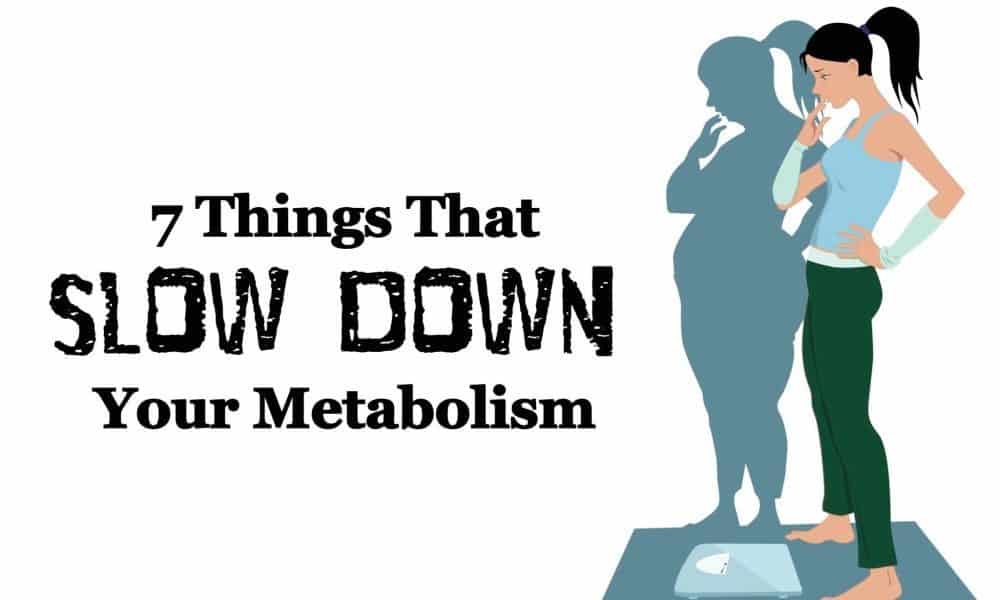
7 Things That Slow Down Your Metabolism--when you want to speed it up tp lose weight

7 Things That Slow Down Your Metabolism

It’s not much of a surprise when we find out that known “healthy” habits and behaviors turn out to be unhealthy.  Many diet myths, health fads and “slim wear” have been debunked or rendered useless – or at best, limited – at one time or another. This brings us to our metabolism – the chemical process human beings use to obtain energy. The body’s ability to use fat as energy instead of storing it is what most people think of when we say “metabolism.” Yes, a well-functioning metabolism is important to our waistlines and hips, but it’s much more complex.
Metabolism involves all of the chemical reactions that take place within our cells in order to keep us alive. Without a healthy, functioning metabolism, our cellular bodies could not receive the necessary energy in order to sustain itself. In short – we’d die. Fortunately, our bodies do not stop metabolizing unless we effectively stop breathing. Our metabolisms can, however, become unhealthy and damaged.
Metabolism plays an important role in various parts of our lives. Not only does it impact how our cells use energy; but how well we sleep, our energy levels, our mood, and even plays a role in how well we digest food and absorb nutrients.
An unhealthy metabolism creates different types of physiological effects, such as:
– Diabetes
– Breathing problems
– Lethargy
– Cognitive decline
– Unstable blood sugar levels
– Organ failure
What causes an unhealthy metabolism? Well, a few different things. It’s quite important that we minimize our exposure to stress, as “stress hormones” such as cortisol and adrenaline counteract the healthy function of our metabolic systems.
So, before we get into the 7 “healthy” habits that harm our metabolism, please remember to minimize stress levels and get regular exercise.  These are probably the two best things we can practice for a healthy metabolism.


Here are 7 things that slow down your metabolism:


1. Conforming to a diet

There are more weight loss products and weight loss systems on the market now than ever before. Want to know why? Well, then follow the money, of course – $6.3 billion. That’s the amount that weight loss companies reported making in 2015 alone. Americans climbing rate of obesity – combined with a serious market opportunity – means “Ca-Ching,” at least for these peddlers of the “latest, greatest” weight loss fad.
Despite of their proliferation, its best of abstain from a diet regimen altogether. The reason is that the majority of diets focus on entirely on restriction, not alteration. In other words, diets don’t teach us how to make subtle dietary changes (i.e. more protein, less carbs); they instead focus on eliminating – or severely reducing – food that provides fuel to our bodies. Low-carb diets are notorious for this practice. Instead, focus on making lifestyle changes for the long-term.


2. Hydrating on just water

Don’t get it twisted…hydration is incredibly important. However, the whole “drink eight full glasses of water each and every day” advice is misleading. Allow us to explain.
The body is a complex system that relies upon a steady stream of healthy vitamins, nutrients and other elements. Unfortunately, overhydrating has led to the misbelief that the gallons of water we’ve ingested have supplied what we need (thank the weight loss experts). The truth is, as healthy as water is, it is not always the best source of hydration for us.
Instead, seek to get a bit of variety. For example, mix some O.J. with water and add a dash of sea salt to get some much needed electrolytes. If it’s only water, mix in a lime or a lemon.

3. Over-restricting sodium intake

Yes, it is important to keep an eye on our sodium intake. The American Heart Association recommends 1,500 mg, which may still be a bit high. However, sodium plays a key role in maintaining our metabolic rate, lowering stress hormones, and aiding digestion.
A better approach is to limit salt intake via processed foods, which are unhealthy for various reasons. Most of us eat too much salt as a direct result of most foods being processed. Instead, make eating wholesome and non-processed foods a part of your lifestyle.

4. Overeating raw vegetables

As with the previous two unhealthy practices, this one needs to be read carefully. We’re talking only about raw veggies here. Simply lightly steaming vegetables most of the time will render this a non-factor.
Vegetables are an incredibly important source of vitamins and nutrients. They’re also very low in calories and sodium, and most contain no fat. But raw vegetables contain a high amount of cellulose – a fiber that is actually used in making paper and paperboard! Our digestive systems are not meant to handle large quantities of this compound, which can also lead to an assortment of digestive problems, creating a slow metabolism.


5. Too much cardio

Part of this is a societal trend. We seem to place more emphasis on sweating all over the elliptical machine or a treadmill as opposed to practicing a variety of different exercises.
The truth is there are some health benefits available in other types of exercise that isn’t available in cardio. Besides, High intensity interval training (HIIT) can give us most of the benefits of an hour-long run without all the added stress hormones.
Muscle-building is also great for achieving some upper and core body strength, boosting our moods, improving brain function, etc. The cool thing is that is that it can be a variety, too: weightlifting, bodyweight training, and yoga are all considered muscle-building exercises.
Also, consider mixing in a bike ride, nature walk or hike. This allows us to get in a cardio fix while also giving the body a bit of a break so we don’t slow down our metabolism.


6. Overloading on fiber

Fiber is an important nutrient for our bodies, especially in the digestive system. However, too much fiber contains elements that can prevent the absorption of important nutrients, thus slowing down your metabolism.
Also, eating too much fiber when having digestive problems can create even more complications. This occurs when there is too much gut flora – microorganisms (i.e. bacteria) that result in digestive problems such as gas, bloating, constipation, diarrhea and even dangerous weight loss. When we ingest too much fiber, it feeds this gut flora and further complicates the issue, creating a slow metabolism.


7. Eating too much “muscle meat”

Muscle meat is the stuff that many weight trainers trying to add muscle eat a lot of – chicken breast, chicken wings, beef patties, etc. Side note: if these meats are farmed from quality sources, such as grass-fed cows and locally-bred chickens, that’s a much healthier o

Wednesday, January 20, 2016

The Strongest Drink That Burns Stomach Fat Immediately


The Strongest Drink That Burns Stomach Fat Immediately

This drink, which is also known as balm, eliminates excess fat and water from the body, improves the function of the brain, memory, hearing and vision.
This drink includes fresh horseradish, unpeeled lemons and honey. It has already been said a lot about honey and lemon, but the health benefits of horseradish are rarely mentioned.
The-Strongest-Drink-That-Burns-Stomach-Fat-Immediately-
Horseradish is a powerful and pungent plant with a wide variety of health benefits, including its ability to aid weight loss, lower blood pressure, alleviate respiratory conditions, build strong bones, improve immune system health, stimulate healthy digestion, and promote heart health. The extraordinary health benefits and the importance of this root has been known for thousands of years, and it is now available all across the world.


It is rich in nutrients and minerals, which includes dietary fiber, vitamin-C, folate, potassium, calcium, magnesium, zinc, and manganese, as well as enzymes and oils, like sinigrin, a powerful glucosinolate.
Horseradish is very low in calories, only 6 per serving, and has no fat whatsoever. It is perfect for weight loss.
Fresh roots can be used all year round, if timely buried in moist sand or kept in the basement. If you have a larger root, you can grate the required amount, and the rest of the wrap in aluminum foil and leave in the refrigerator in a box of vegetables.
If you want your grated horseradish to remain fresh even after three weeks, mix it with a teaspoon of sugar and 4 tablespoons of lemon juice or vinegar.
In tightly closed jars, horseradish can stand in the refrigerator for up to 3 weeks.
DRINK RECIPE FOR WEIGHT LOSS
– 125 g of horseradish
– 3 lemons (before use, place them in a container filled with water and a tablespoon of vinegar for 10 minutes to wash away pesticides)
– 3 tablespoons honey
Procedure:
In a blender add 125 grams of horseradish and blend it well. Cut the lemons (unpeeled), remove the seeds, and add them in the blender. Mix everything together until you get a smooth consistency. Then, add three tablespoons of honey and mix everything well.
Keep this drink in a sealed jar in the fridge.
Dosage:
Take one teaspoon of this balm twice a day with meals for 3 weeks.
Source: http://mynaturalwayoflife.com

Wednesday, January 13, 2016

Cancer Screening Has Never Saved Lives

'Cancer Screening Has Never Saved Lives' - BMJ Study Concludes

'Cancer Screening Has Never Saved Lives' - BMJ Study Concludes
Millions have marched for "cancer causes." Millions more have been diagnosed "early" and now believe screening saved their lives. But a new study confirms something we have been reporting on since our inception: In most cases, screening not only has not "saved lives," but actually increases your risk of dying.
An extremely important new study published in the British Medical Journal titled, "Why cancer screening has never been shown to "save lives"—and what we can do about it," confirms something we have been reporting upon at GreenMedInfo.com since our inception, namely, cancer screening has not lived up to its long held promise of "saving lives" because disease-specific reductions in mortality do not equate to reductions in overall mortality. Worse, in some cases overall mortality actually increased because of screening. 
In the new study, Vinay Prasad and colleagues, argue that the real benchmark for the success of any cancer screening program is if the "early stage" cancers being diagnosed and treated actually result in a reduction in the overall mortality.
For instance, we have reported extensively on the widespread misclassification of ductal carcinoma in situ (DCIS) as a bono fide malignant cancer, as well as its epidemic level overdiagnosis and overtreatment. Tens of fhousands of women are diagnosed each year with these so-called "early stage breast cancers," even though the National Cancer Institute itself acknowledges it should be classified as a benign or indolent lesions of epithelial origin. The New England Journal of Medicine published a study in 2012 shows that approximately 1.3 million women were diagnosed with DCIS in the past 30 years, with most receiving either mastectomy, lumpectomy, radiation, chemotherapy, or some combination thereof. Ironically, many of these women ardently believe that their lives were "saved" by the screening and treatment, succumbing to the biomedical equivalent of Stockholm syndrome where identifying with the 'aggressor' becomes palliative. In reality, most suffered irreparable harm not from the "cancer," but from both the psychological and physical effects of being wrongly diagnosed and treated. If the end point were not breast cancer specific mortality ('invasive' breast cancer has not declined but increased with screening, indicating overdiagnosis), but overall mortality, it is likely that these DCIS diagnosed women's lives were significantly truncated because of screening programs; at the very least, the quality of their lives would have been significantly negatively impacted.
Radiation
Much of the damage, pain, and suffering associated with over-medicalization could have been avoided if public health advocates and private industry promoters of screening programs had realized that reducing the risk of cancer in one bodily location -- the breast, the colon, the lung, the thyroid -- does not necessarily translate into a reduction in mortality risk everywhere else. It is this meme-plex of medically-reinforced ignorance which drives the many disease-specific, multi-billion dollar, cause-marketing campaigns, like the heavily pinkwashed "Breast Cancer Awareness" campaign, which increasingly the public is acknowledging to be a highly unethical money-making scheme.
The article summarizes the problem associated with confusing disease specific with overall mortality reduction, succinctly:
Despite growing appreciation of the harms of cancer screening,1 2 3 advocates still claim that it "saves lives."4 This assertion rests, however, on reductions in disease specific mortality rather than overall mortality.
Using disease specific mortality as a proxy for overall mortality deprives people of information about their chief concern: reducing their risk of dying.5 6 Although some people may have personal reasons for wanting to avoid a specific diagnosis, the burden falls on providers to provide clear information about both disease specific and overall mortality and to ensure that the overall goal of healthcare—to improve quantity and quality of life—is not undermined.7
In this article we argue that overall mortality should be the benchmark against which screening is judged and discuss how to improve the evidence upon which screening rests."
And so, without the proper benchmark or end point, all the educational and fund-raising efforts going towards "reducing deaths" or "saving lives" from breast, prostate, lung, skin, brain, [insert body part], become misleading, if not overtly propagandist in nature.

Indeed, the extant scientific evidence itself reveals that at best the present disease specific agenda for "cancer prevention" is pseudo-scientific. In the section of the study subtitled, "Why cancer screening might not reduce overall mortality," the authors summarize what the literature reveals on the topic:

Discrepancies between disease specific and overall mortality were found in direction or magnitude in seven of 12 randomised trials of cancer screening.8 Despite reductions in disease specific mortality in the majority of studies, overall mortality was unchanged or increased. In cases where both mortality rates were reduced the improvement was larger in overall mortality than in disease specific mortality. This suggests an imbalance in non-disease specific deaths, which warrants examination and explanation. A systematic review of meta-analyses of cancer screening trials found that three of 10 (33%) showed reductions in disease specific mortality and that none showed reductions in overall mortality.9
The implications of this are profound.
As we reported previously with Anjelina Jolie's decision to have her breasts and ovaries prophylactically removed, ostensibly to "reduce her risk of dying," removing healthy body parts to prevent disease-specific mortality is unlikely to reduce the overall risk of dying. And yet, the "Jolie effect" is a well established phenomena. Her decision was lauded the world over as courageous and  an "evidence-based" precautionary step, with tens of thousands of women (and some men) following suit. We hope the new BMJ study raises a flag of true caution for those who may habitually and uncritically follow the celebrity-centric herd mentality.
The significant harms of screening overdiagnosis and overtreatment extend to men as well. For instance, aggressive prostate screening programs over the past few decades have resulted in the removal and/or irradiation of millions of men's prostates. A 2004 study found that an astounding 200,000 men are being diagnosed annually with prostate cancer.1 Tragically, the 2013 National Cancer Institute report referenced above also found that so-called "early stage prostate cancer," high grade intraepithelial prostatic neoplasia (HGPIN), is also essentially a benign lesion within prostatic epithelial tissue, not unlike DCIS in women's breasts. In other words, millions of men were diagnosed with a potentially lethal "pre-cancer" or "early stage cancer" they never had.
As an aside, it should be noted that even in the case of lesions of true concern for malignancy, there is always hope. Cancer is not an inexorably lethal, genetic mutation-driven process that happens in an environmental, nutritional, and psycho-spiritual/emotional vacuum. Instead of viewing it as the biological equivalent of a terrorist, and cutting, burning, and poisoning the target tissue (and, collaterally, the entire body of the host), we need to abandon the warfare model of allopathic medicine and adopt one that focuses on targeting cancer stem cells in non-toxic ways, looking at carcinogenesis through the lens of the informational dysregulation of genetic and epigenetic pathways in the cell; informational "disease" in contradistinction to physiochemically-based disease is, of course, more prone to being reversed. Cancer, in this view, can be halted in its tracks, and even regressed, assuming that, along with informational corrections (e.g. "nanopharmacological" approaches like homeopathy, "energy healing," high quality food (which is also information-containing)), the tumor microenvironment can be adjusted back to healthier conditions through detoxification, lifestyle modifications, mind-body interventions, and targeted, "high dose" nutritional support.

Tuesday, January 12, 2016

A hypnotherapy article

You may have heard the rumblings… “Hypnotherapy helped my mom quit smoking”… to which the onlooker replied...
”Pshh! Yea right, I don’t believe in that stuff. It’s all mind-control and chickens and Office Space shenanigans.”

They're entitled to their opinion, it’s just that they're wrong.
American Health Magazine lets us know that after 6 hypnotherapy sessions clients experienced 93% recovery, whereas after 600 psychoanalysis sessions clients experienced 38% recovery.
Why? How? When? Why?!

Good questions, I asked them too before I became one of the world’s leading hypnotherapists.
Come hang out with me during this free webinar to learn how hypnosis can help with all the ish we wish therapy could fix.

P.S. You won’t learn how to cluck but you will learn a 60 second stress relief process that is so effective I decided to teach it to 4 million peeps (get it? PEEPS!) on national TV and they LOVED it.
P.P.S. I call hypnosis “meditation with a goal”… so that’s what it’s gonna be like. Click “learn more” now to save your seat in the free webinar…hurry up! This ad is funny so seats fill up fast.  Lost the author--Grace someone. Please advise if you know.

Monday, January 11, 2016

I haven’t bought anything new for 200 days. This is what I learned


I haven’t bought anything new for 200 days. This is what I learned


A few months ago, I went through the worst experience of my life: my father passed away. He had cancer.
In our society, you can’t just mourn a person’s loss — you need to work. Not just at your job, but on piles of paperwork, people to notify, and arrangements to be made. Finally, when I thought all of the hard work was over, I had to empty out my father’s apartment.
This is thankless work.
Going through my father’s old things, I felt the loss of my father with each and every item I sorted.
And there was a lot of sorting to do.
It took weeks to clear out the lifetime of possessions in my single father’s small apartment. Weeks to sell, donate, recycle, or throw out the boxes and boxes of kitchenware, clothing, furniture, office materials, and so much more…
I threw away a normal life of accumulation. A life you and I all go through.
Time, money and effort had been heavily invested in getting all of this stuff — only to be disposed of with great difficulty. We are destroying the planet for future generations, all so that we can enjoy a short lifetime full of material possessions that in many cases are hardly used, rarely necessary, and easily forgotten.
These were sobering thoughts for me.
I embarked on an experiment lasting 200 days where I would try to buy nothing new. Could I survive 200 days without paying tribute to the mall?
I did. Excluding groceries, medicine, a pair of rock climbing shoes and basic toiletries, I borrowed and bought secondhand, or simply went without.
Here is what I learned from this experience.

1. There is already too much stuff in the world

As I toured various thrift stores, online classifieds, Facebook buy/sell groups and the like, I was shocked to see the sheer volume of stuff we humans have already created. Mountains of clothes, tons of furniture, dishes, pans, walking sticks — an ocean of all things imaginable. As all of this stuff is being thrown away, more is being churned out. We don’t need more.

2. People buy things out of pure compulsion

As I looked to fill my needs through preowned sources, I was blown away by the amount of new items in thrift stores. Items that were unused, complete with price tags and original packaging. Everything from new scented candles to new clothing graced the aisles of secondhand stores. This showed me that the act of buying is often completely disassociated with needing, or even wanting. It just seemed to be like a compulsion that needed to be filled and that was the end of it.

3. There is an unreasonable stigma against pre-owned

As I blogged about my experience, I got a lot of interesting feedback on the hygienic aspect of my efforts. Many felt that buying clothing, furniture, and other goods used instead of new was dirty and uncivilized. What a weird mentality! These same people would happily donate their used goods to thrift stores. I guess it’s good enough for the poor — but not for “us.“

4. There is so much abundance

During my 200 days, I learned that I didn’t need to go to big box stores to buy what I needed — there was plenty in my community. Local thrift stores and classifieds had most of the goods I needed. Our communities have an abundance of stuff and plenty of people willing to give it away at a very low price or for free.

5. When nothing is new, nothing is expensive

My bank account definitely got a break during these 200 days. Secondhand comes at a delightfully steep discount. I never felt that I compromised on quality, either!

6. It’s fantastic paying a person instead of a corporation

Especially when shopping through classifieds, I found that most sellers were honest and helpful. They were normal people just wanting to recoup a portion of their purchase price by selling perfectly usable items. It was refreshing to know that my money would be going directly to someone just like me, instead of a faceless corporation.

7. I don’t really need most of that stuff

Truth is, some things you simply cannot find preowned. Lots of items, even common ones, are either impossible or impractical to find preowned. When I was forced to not buy them — against my strongest impulses at times — I was surprised how often nothing changed. Not my health, happiness, or inner harmony. I realized that most things are really just ”nice-to-haves“ — real needs are very limited.
My 200 days was not only an optional experience in sustainable living and minimalism. It was a necessary and transformative journey.
When someone dies, you’re expected to “get past it” and go back to normal. I thought that even worse than losing my father would be if I came out of the experience unchanged.
Instead, I allowed the experience to change me deeply. I’ll never ”get past it,” because every day my father’s passing inspires my words, my actions, and my views on life.
I hope that you might allow this post to change you a bit as well. Maybe you’ll pay a visit to a thrift store for your next clothing purchase, or embark on your own 10, 30, or 200 day challenge. At the very least, I hope you’ll just change the way you think when you buy another item.
Source: collective-evolution.com

10 things worth doing every morning

10 things worth doing every morning before 10 am.

Here we present a short list of activities which are guaranteed to give a great start in the morning. Take a look — and have a great day!

Meditate

Meditating or even some simple breathing can help you begin your day with a sense of calm. Instead of reaching for your phone or checking email first thing in the morning, take just a few minutes to sit and experience the quiet.
There is plenty of activity during our day, make a commitment to start on a quieter note. It will set the tone for your day and will help increase your focus, energy, and optimism.

Reflect in gratitude

“If the only prayer you said in your whole life was, ‘thank you,’ that would suffice.” — Meister Eckhart

Start your day by reflecting on what you are grateful for. A consistent practice of gratitude in the mornings will increase your awareness of gratitude throughout your day. It will also make you more resilient when challenges occur and help you put drama in perspective.

Set your daily intention

In the quiet of the day, before the fires need putting out, plan your day by focusing on three goals you want to accomplish. Make those goals a priority for the day. When you set about planning your day with intention, you are more likely to feel productive at the end of it.

Pad your schedule

As you go about setting your daily intentions, pad your schedule to allow yourself to tend to fires as they arise. Padding your schedule with free time will give you a better chance of achieving your goals and may even add some downtime throughout the day.

Hydrate

Your body awakens dehydrated, so it is very important to drink up first thing in the morning. In her book, The Body Ecology Diet, Donna Gates suggests you drink half of your entire daily water intake by mid-morning. It will flush your system of toxins, leave you feeling less hungry and reduce headaches throughout the day.

Stretch

You will be hard-pressed to find anyone who doesn’t wake up feeling a bit stiff. It isn’t always easy to incorporate exercise into a morning routine. If you were going to choose one thing, the American Journal of Sports Medicine suggests adding a short muscle-stretching sequence of exercises to your morning schedule. Studies show that consistent stretching in the morning can increase flexibility, improve circulation, reduce stress throughout your day and improve posture.

Listen to music

Starting your day with upbeat and fun music will not only wake you up but it will fill you with positive energy for your day. A 2013 study found that music makes you feel good. According to study participants, the two most important benefits of listening to music are “mood regulation“ and ”self-awareness.” Not only has it been shown to improve your mood but it can end up increasing motivation, performance, and lead to a better night’s sleep too.

Smile

Start your day off by smiling at yourself in the bathroom mirror. Smiling will have a positive effect on your overall attitude and well-being, even when it starts out a little forced. Smiling makes you more approachable, and appear more trustworthy. In fact, The University of Montpellier discovered that smiling will also make you a more effective leader.

Clean Up After Yourself

Life is busy and morning routines can be a bit rushed. It can be very tempting when you are running behind to leave your clothes on the floor, dishes in the sink or leave the trash until later. Just do put them away!
Procrastination around cleaning up after yourself can prevent you from realizing our highest potential and best work. It also allows you to relax fully upon returning home. It is better to pro-actively clean up after yourself than waiting to be called out on it.

Do Your Hardest Task First

It might seem enticing to get a bunch of easy things checked off your to-do list, but it has been shown time and time again that doing your hardest task first leads to a more productive and happier day. You are more likely to remember the day as being a good one when your day gets better and is easier over time. The bonus: it helps stop procrastination over the things we like to do the least.
Source: powerofpositivity

Friday, January 8, 2016

Drinking Lemon Water In The Morning Is Good For You

They-Said-That-Drinking-Lemon-Water-In-The-Morning-Is-Good-For-You-Here-Is-What-They-Didnt-Tell-You

They Said That Drinking Lemon Water In The Morning Is Good For You. Here Is What They Didn’t Tell You


We hear every day that consuming lemon water on an empty stomach in the morning is very health-beneficial, but not many of us are familiar with the actual effects this drink has on the body.
Lemon juice is loaded with flavonoids, potassium, antioxidants, proteins, as well as vitamins B and C. Plus, it’s a powerful antiseptic, antiviral and anti-inflammatory agent.
Lemon water has the ability to strengthen your immune system and prevent infections due to its high bioflavonoid, citric acid, magnesium, calcium and pectin content. When consumed on an empty stomach, it has the ability to detoxify your body, stimulate weight loss and maintain your body’s pH balance. Moreover, it treats digestive issues as well.
They-Said-That-Drinking-Lemon-Water-In-The-Morning-Is-Good-For-You.-Here-Is-What-They-Didn’t-Tell-You1
16 Ways in Which Lemon Water Helps Your Health

1. Immune System
Lemon water stimulates the function of the lymphatic system, which works together with our immune system.

2. Inflammation
Acidity is the primary cause of inflammation in tissues. The anti-inflammatory properties of lemons counterbalance acidity.

3. Flu and Cold
Lemon boosts your immune system and has many antiviral and antibacterial properties due to its high vitamin C content, which makes it the ultimate remedy for flu and colds.

4. Weight loss
Lemon water is especially beneficial for maintaining healthy weight as well as balancing your blood sugar. The pectin in lemon water wards off cravings, thus reducing your appetite throughout the day.

5. Acne
Drinking lemon water in the morning will regulate the acidic temperature of your body, thus preventing these irritating breakouts.

6. Kidney Stones
Lemons contain potassium which increases citrates in your urine, thus preventing the formation of oxalate.

7. Gall Bladder
Pain inflicted from gall bladder stones can be significantly reduced by drinking lemon water while eating.

8. Gastroesophageal Reflux Disease (GERD)
TUMS can be replaced with lemon water.

9. Colitis
Colitis is an imbalance of the acid/alkaline levels in the body and lemon water balances your pH levels.

10. Fibromyalgia
Pain inflicted from fibromyalgia can also be soothed with lemon water. For better results, you can combine it with yoga stretches.

11. Joint Pain and Swelling
As lemon water stimulates the decrease of uric acid in joints, it also reduces inflammation. People with arthritis can particularly benefit from it.

12. Constipation
You can easily treat constipation with lemon water as it stimulates regular bowel movements. Surely, lemon water is amazing for your digestive health.

13. Finger Nail Health
Lemon water strengthens your nails as well as removes the white spots that appear on nails from time to time.

14. Muscle Soreness
After a vigorous workout, drinking lemon water can significantly reduce muscle pain.

15. Food-Borne Illnesses
Prevent food poisoning with lemon water.

16. Alcohol Cravings
Drink lemon water at parties and keep the alcohol craving at bay.

Wednesday, January 6, 2016

Quit Smoking And Reclaim Your Life

Quit Smoking And Reclaim Your Life: Risks Of Lung Cancer, Other Diseases Decline Significantly

Quitting the cigarettes will help you
When you quit smoking, your body immediately begins repairing itself. cancer.org
It’s hard to stop smoking. Understanding what immediately happens to your body when you stop smoking, however, will help you kick that habit to the curb for good.
The moment you put down your cigarette, your body is already going through positive changes. Just 20 minutes after you quit, your heart rate will return to normal. After two hours, both your heart rate and blood pressure levels will return to normal — and this is when the nicotine begins to fade out of your system.

Your withdrawal symptoms typically begin between two and 12 hours after your last cigarette, and this is, admittedly, the hard part. Nicotine withdrawal will usually reach its peak about three days after you quit, meaning you’ll experience headaches or nausea, as well as crabbiness. However, at this point the carbon monoxide levels in your blood will have dropped back to normal.

After that, if you can defeat the cravings, you have only good things to look forward to: one to nine weeks after quitting, your coughs, shortness of breath, or burning lungs during physical activity will begin to decrease. Years later, your risk of heart disease as well as your risk of various cancers (including lung cancer) will be half that of a smoker’s risk.

Fifteen years after stopping your smokes, your risk of heart disease is equivalent to that of non-smokers. And if you stop smoking before the age of 30, you’re very likely to live the life of someone who has never smoked before — unless you’ve smoked extensively and done irreparable damage to your lungs that can lead to chronic obstructive pulmonary disease (COPD).

Timeline of Quitting Cigarettes Quitting smoking has an immediate impact on your body. cancer.org
Putting down the cigarette affects each of your individual body parts, too.

Your Brain

Cigarettes release “feel-good” chemicals in your brain, having an effect on you that is similar to addictive drugs like heroin. The increased release of these opioids is what makes it so difficult to quit. “It appears that smokers have an altered opioid flow all the time, when compared with non-smokers, and that smoking a cigarette further alters that flow by 20 to 30 percent in regions of the brain important to emotions and craving,” David J. Scott, an author of the study examining smoking’s effect on the brain, said in a news release. Removing nicotine from the bloodflow — which typically occurs several days after you stop smoking — will ultimately alter the opioid flow in your brain, and gradually your brain’s chemicals will return to normal. Once you get past the hurdle of initial cravings and withdrawal, your brain won’t be reliant on those chemicals to feel good.

Your Lungs

Lungs have this amazing tendency to regenerate rather quickly. Right after you quit, your airways begin to see a decrease in inflammation, and the cilia — little hair-like things that line them — begin to work again after a smoke-induced paralysis. Cilia, which act as the lungs’ cleaning system, begin repairing themselves just days after you stop smoking and can return to their normal function in a few months’ time.
“Paradoxically, people find that they cough a little more right after they stop smoking, but that’s natural,” Laura Blue wrote in Time magazine. “That’s the lungs cleaning themselves out.”

Your Heart

Quitting smoking is a more effective way to lower your risk for heart disease than common medications like aspirin, beta-blockers, statins, and ACE inhibitors, according to the National Heart, Lung, and Blood Institute at the NIH. The moment you quit smoking, your heart and blood vessels begin to improve, lowering your chance for heart attacks.

Your Teeth

Nicotine stains your teeth, so when you stop smoking, you have a chance to improve their whiteness and strength. Your bad breath, stinking of smoke, will also repair itself into something a bit more neutral. Because tar coating your teeth creates a “film” of sorts, bacteria are more likely to settle there and cause tooth decay. Once you stop smoking, you may need to go through an oral hygiene routine to begin scraping away some of the tar on your teeth. Brush and floss twice a day, and drink plenty of water.

Your Skin

“Your skin reflects your lifestyle and what you eat and drink,” Dr. Andrew Carmichael told Net Doctor. Indeed, smoking has an effect on your skin — increasing your risk for eczema, and speeding up the aging process. The harmful toxins that enter your body through cigarettes include carbon monoxide, tar, formaldehyde, hydrogen cyanide, ammonia, mercury, lead, and cadmium — and these all restrict blood flow to the skin and even break down elasticity structures in the skin, like collagen and elastin. This is how smokers’ skin wrinkles so easily.
Though some of the skin damage is permanent, stopping smoking will immediately improve the blood flow and hydration to your skin, making it more full and youthful looking. Drinking plenty of water after smoking cessation will help to get your skin back on track. The processes that lead to extra wrinkles will slow down or stop once the toxins are out of your body. Likewise, if you have bags under your eyes from lack of sleep, removing the smoke from your routine could improve your sleep cycles, according to a Johns Hopkins study.
So don’t give up just yet. You have better looks and fuller health to look forward to.