Sunday, December 4, 2016

If You Can Say Any of These 7 Things About Your Partner, You Should Never Let Them Go

If You Can Say Any of These 7 Things About Your Partner, You Should Never Let Them Go


Up until recently, I would have told you that this idea of "the one" that has been perpetuated by so many people for so long, is pretty much total crap.
After dating a handful of women, I found myself wishing that I could just find the right one. The one that was going to be my adventure buddy.

The one that had my best interests in mind at all times. The one that I was proud to show off and be supportive of, because she did the same for me.
Searching for this person is one of the craziest journeys you will ever find yourself on, but it's one in which you grow and learn a great deal about who you are and what you really need in a partner.
Here are seven signs that you've found the perfect partner:


They supports you and your endeavors
A good partner is one who is going to help you navigate the difficult nature of life.
Many people still believe today that every man needs a strong woman to bring direction and a greater purpose to his life.
Without that better half, men lose out on the wisdom that they brings with her.


You think they're the most beautiful person you've ever seen
Undoubtedly, it is true that beauty lies in the eye of the beholder.
Attraction is one of the most complex and multifaceted aspects of human nature, so it's really quite magical when two people come together on that level.
If you can't think of a more beautiful partner to fall in love with and commit yourself to, you've likely found the one.
Of course, there are other things we value over beauty, but that doesn't mean it's not important!


They're kind and compassionate
This one should probably be expected. The partner in your life should be kind and loving, especially towards you.
She's the one who is always looking out for you and your well-being. As Neil Young sings, "I crossed the ocean for a heart of gold."


They can compromise
Being stubborn and difficult is the easy thing to do. It's hard to negotiate a fair compromise with someone.
If your partner is always ready to strike a deal with you so that both of you can get something you want, it's a good sign that you've found the foundation for a successful relationship.


They lets you know when you're wrong
Sometimes your partner needs to call you out on your poor behaviors and habits.
Not to mention, many men have a great tendency to make the completely wrong decision. If your partner is one who isn't afraid to tell you when you need to get your act together, that's a sign of love. She wants you at your best.


They have passion
Passion is that thing that almost everyone in life is searching for.
A passionate partner brings with her an opportunity to express your own passion.
When the two of you can share your passions and bring them together in harmony, it's truly something special.

j
You're not about to let them go, regardless of what happens
Falling head over heals in love with someone isn't an experience that always comes with an explanation.
But, that shouldn't stop you. If you're in love with this partner and feel as if your life isn't whole without her, then don't ever let her go.
It's easy to take your partner for granted, especially as time passes.
Don't ever forget how much she means to you, because if you ever have to make the decision to let her go, she may never come back.

A Japanese Technique for Overcoming Laziness

A Japanese Technique for Overcoming Laziness

A Japanese Technique for Overcoming Laziness
Almost all of us periodically sets ourselves a new goal or challenge — and just as often in the end fails to achieve them. We end up telling ourselves that we’re just not ready yet, that we’ll do it next week, next month…next year.
We might even pursue them with zeal at the start. But once we’ve made a small amount of effort, we’ll tell ourselves we’ve done enough, and it’s time to take this whole ‘starting a new life’ thing more slowly.
Why does it always turn out like this? The answer’s fairly obvious: Because we try to achieve too much, too fast; because we get sick of the new responsibility; because it’s difficult to change old habits and try something new.

Kaizen, Or The One-Minute Principle

In Japanese culture there exists the practice of Kaizen, which includes the idea of the ’one-minute principle’ for self-improvement. At the heart of this method is the idea that a person should practice doing something for a single minute, every day at the same time. Clearly, it shouldn’t be any trouble for absolutely anyone — even the laziest person — to carry out a given task for such a small amount of time. Whereas you will more often than not find an excuse not to do something when faced with carrying it out for half an hour or an hour a day, you should be able to do without any misgivings for just 60 seconds.

Whether it’s doing press-ups or reading a book in a foreign language, in this case the task before you won’t seem like something unpleasant which you have to get through, but will instead be an activity which brings you joy and satisfaction. In taking one little step at a time, you’ll will move on to the path of self-perfection and achieve great results.

It’s important to overcome that lack of confidence you might have in your own abilities, as well as free yourself from those feelings of guilt and helplessness. You need to experience a sense of victory and success to move forward. When you’re inspired by such feelings, you will gradually begin to increase the amount of time you spend doing the task which you have set yourself — maybe at first just for five minutes more, but then this will soon turn into half an hour, and then even longer after that. 

In this way, the one-minute principle lets you see the progress you’re making right before your eyes.

Kaizen originated in Japan. The word itself contains two roots — ‘kai’ (change) and ‘zen’ (wisdom). It was invented by Masaaki Imai, who believes this philosophy can can be applied just as successfully to the world of business as it can be to one’s personal life.

At first glance, this practice might seem doubtful and ineffective for people who have grown up in Western culture, with its emphasis on the idea that results can be achieved only by undertaking immense efforts.

 But elaborate, challenging programmes of self-improvement which deprive a person of huge amounts of energy can simply end up exhausting him, and leave no tangible results, whereas Kaizan is something that anyone can attempt in virtually any sphere of their life. In Japan for example, it is often applied to improve management techniques.

All you have to do is understand what it is you want to achieve, and you’re already set to go.

Saturday, December 3, 2016

8 Tips to Mastering Body Language that will Win Anyone Over

8 Tips to Mastering Body Language that will Win Anyone Over

8 Tips to Mastering Body Language that will Win Anyone Over


One of the best pieces of advice I’ve ever received was from an old sales manager of mine who said, “It’s not just about what you say, but HOW you say it.” You can be the most educated person in a room but if you come off like a robot, people won’t listen to you. Effective communication is all about influence, whether you are speaking to a crowd, someone you just met, or someone you speak to every single day. There are some key elements to managing your body language that can really open people up to you and what you are saying. It’s like the difference between someone hearing you and captivating someone. Here are 8 ways to increase your influence over your audience with effective body language:


Straight not Rigid

Posture is one of the first things people notice about you. The key here is to stand tall, without appearing rigid. You’re exuding confidence and strength, not standing at attention for a military-grade inspection. If you appear weak with your shoulders hunched and stooped over, people are going to sense weakness. If you walk around like you have a rod in your spine people are going to perceive arrogance. So stand up straight. relax your shoulders, and hold that head high.


Handshake Etiquite

I am a Texan, so handshakes are kind of a big deal to me. I was taught from a young age that the first thing you do when you introduce yourself to someone is shake their hand. Handshakes are not meant to be a battle of wills. You’re not trying to crush the hand of the other person, although there are specific times when a firmer than normal handshake is required. For instance, the first time you meet a boy who is going to take your daughter on a date. In normal, more civil, circumstances you want your handshake to be firm, but not crushing. A lot can be said in a simple handshake, so make sure you are putting out the message that you want to be heard.


Position Your Body Accordingly

Your stance is extremely important to setting the mood of a conversation. Opening your stance to the person you are talking to gives off a sense of vulnerability to them. This makes you seem more approachable and personable. If your hips are off center, or you are turned even slightly to the side, you give off an impression of being shut off or defensive. Keep both of these things in mind when you are talking to someone, because both stances have good, practical applications.


Don’t be a Leaner

One bad habit of mine that I had to break was the tendency to lean on things when speaking to people. The simple act of leaning back against a wall or putting a hand on a wall can make you appear too casual. Again, this kind of goes back to the posture thing. You have to send a message with your entire body, and if that message is “I can’t even stand up on my own,” people aren’t going to listen.


Pay Attention to your Neutral Face

I have a serious problem with “resting bitchface syndrome” (RBFS). I don’t mean to look mean, I just always seem like I am scowling. I remember one time in my old office where I saw a woman walking down the hall who I’d see a couple of times a week. On this particular day, we happened to strike up a conversation, and she said: “you’re so nice, I always thought you were mean.” I asked why she thought that, and she said I just looked mean. It never occurred to me that my RBFS gave off that impression, so I’ve always made it a point to smile at people when I see them, so they don’t get the wrong impression.


Constructive Eye Contact

Eye contact is probably the most important aspect of body language that people mess up. If you are talking to someone and your eyes are shifty, it seems like you are being deceptive or aloof. Then again, if you intensely glare into someone’s eyes the entire time you are talking to someone, you might give off a serious serial killer vibe. Find that happy medium between intensity and diversion so that when you make eye contact throughout your interaction it puts weight behind what you are saying.


Match their Body Language

One important aspect of body language in a conversation is to pay attention to the other person’s body language as much as you pay attention to yours. One technique that works if to mirror what they do. If they cross their arms, cross yours. Use their body language to steer yours. Again, this makes someone take notice of your body language and allows you to change theirs by changing yours. I honestly recommend consciously trying this one just to see how well it works.

Friday, December 2, 2016

7 Important Life Lessons You’ll Learn the Hard Way but Need Now


7 Important Life Lessons You'll Learn The Hard Way But Need to Know NOW

7 Important Life Lessons You’ll Learn the Hard Way but Need Now


How’s life going, smooth sailing, right?
Well, of course there are a few hiccups every now and then.
But when something comes up isn’t it so much easier to learn from someone else’s mistakes, especially when they point them out for you.

It’s way better than trying to figure things out on your own, making the same cycle of mistakes until you finally learn the hard way.
But unfortunately you don’t have it that easy. At least not with the most important parts.
Sure you’ll go to school for a number of decades and learn scores of helpful information. But none of it will teach you how to live a happy and successful life.

Trigonometry and chemistry will seem simple when compared to having to navigate your way through life. They don’t teach you that in school. They leave the really hard stuff for you to sort out.
Not to say that reading and writing along with math and science isn’t important, just that finding your path and being happy in your everyday life is just as important. Just because it wasn’t in a textbook doesn’t mean you don’t need it.

The fact of the matter is you don’t stop learning. You become a student of life.  And in order to get to where you want to be in a timely manner you have to be a quick learner, or have one hell of a cheat sheet.


Life Lessons                    
Life lessons are among the most important things that you’ll learn after completing your academic career. They teach you something that forever changes how you handle things from that point on.
They’re important because identifying and learning them can be the difference between being stuck in the same place for eternity or moving forward effectively and making progress.
I think it’s safe to say we’d all rather move on and find happiness rather than spin our wheels in the same place of misery forever.
The only issue is, how do you learn the stuff you don’t know you need or you don’t know is important beforehand.
There isn’t any class that teaches you all about the important, hard life lessons. You end up stumbling on to them at different parts in your life.
Some of them even take decades to grasp and learn.
If you’re lucky you might get a heads up from grandpa about one or two. But chances are he’s going to tell you when you’re a little too young to understand. So it falls on deaf ears.
By the time you put two and two together, you’re already stuck.
Most people end up learning important life lessons the hard way, so they allow everyone else to do the same.
But that ends here because there’s really no point in you suffering through the same process everyone else did.


Getting a Head of the Curve
Your outcome is going to be very different from theirs because you will walk through life knowing what it took others much of their life to gain.
You’re going to have the advantage of wisdom before having the experience. Typically you gain the wisdom after having the experience. Now, just think of what you’ll gain from being knowledgeable going into it.
You’ll completely avoid the series of mistakes and setbacks that take place before you actually learn, not to mention the frustration and drama that comes along with it.
You’ll be one smart cookie. You’ll know exactly what to do and what to take from the experience, making it easier to succeed and navigate your way to happiness.
So let’s skip all the drama.

  1. Forgiveness is all about you
Holding on to a grudge may seem like you’re punishing someone for hurting you, but you’re doing more harm to yourself. As long as you’re focused on this you can’t truly be happy.
While forgiving them may seem like letting them get off easy, because the grudge hinders you more than it hurts them, you’re actually not. In fact, it has nothing to do with them.
You’re actually letting go of the past so that you can focus on your present and future. Let karma take care of them.

  1. Perseverance equals success
You can accomplish a lot by trying.
Trying to do something is usually the hardest part. And if you keep going on you will be surprised by the results.
You can’t lose if you refuse to give up.

  1. No one else can make you happy
Hollywood portrays these romantic stories about how someone else can change the whole disposition of your life but that’s not realistic.
Other people cannot focus solely on your happiness. They have other things that they’d like to accomplish too.
Being happy is your responsibility. No one else can do that for you.
Besides, you’re the only one who truly knows what makes you happy anyway.

  1. You don’t have all the time in the world
Whoever said it’s never too late probably didn’t own a watch or work according to a deadline.  Time is unlimited but uncontrollable so you can run out of it.
Don’t waste your time today thinking that you’ll always have tomorrow. You’ll just be prolonging your own misery.
If there is something you want to do or goal you want to achieve start now. Stop putting things off.
You don’t want to wake up 15-20 years from now realizing how you wasted your time and evaded your happiness.

  1. You can’t succeed without failing
Many people take failure as a sign that they should give up. But the fact of the matter is having some type of setback is just part of the process.
It doesn’t necessarily mean you’re heading down the wrong path.
Instead of throwing in the towel, try to learn something from your mistake and then take another stab at it.
Think of each failure as a way to perfect your path to success.

  1. Worrying is a waste of time
Worrying is an odd emotion because it stirs up anxiety and frustration without any benefits.
It makes you uneasy and clouds your thoughts. If you find yourself worrying about something figure out a way to prevent or handle the situation, focus on a solution instead.
If there’s nothing you can do, change your focus. There’s no point in keeping yourself in that state of mind.

  1. You only know what you know
Many people will make it seem like you need to be an expert at something before you can do it. But they’re wrong.
Don’t get caught up in information overload, it’ll stop you in your tracks.
It’s impossible to know everything. So you can’t wait until you’re a full-fledged expert before you take action.  That’s just another form of procrastination.
Accept that there will be some things that you’ll have to learn along the way, and that’s perfectly fine.

Use it Now
After many, many years of school you still won’t know it all but you don’t have to spend your entire life trying to figure things out.
Sure there will be a few more things you’ll pick up along the way but it will be incredibly helpful to know the important stuff beforehand.
Maneuvering through life’s challenges will be simpler for you now because you already have the important lessons and just need to apply the knowledge.
Today you are that much closer to happiness and success because you’ve learned the lessons of academics and life.
What lesson could you apply now?

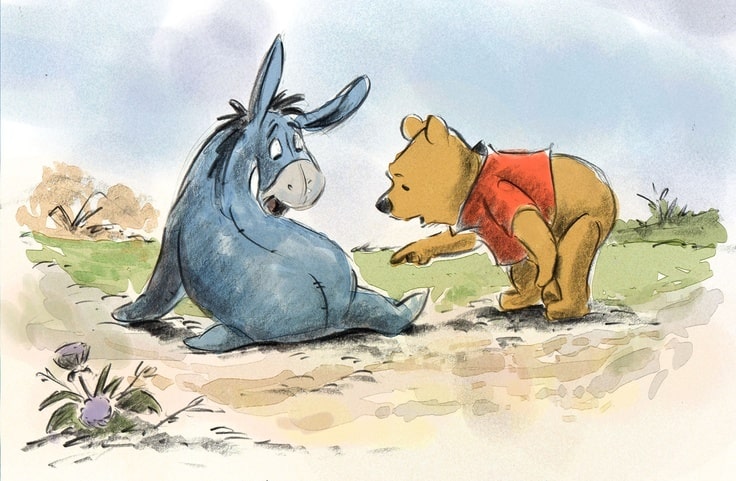
20 Utterly Profound Winnie-the-Pooh Quotes To Make You Smile

20 Utterly Profound Winnie-the-Pooh Quotes To Make You Smile


Perhaps we adults need to revisit the realms of children’s literature, TV and film once in a while because there is a surprising amount of wisdom to be gleaned from them.

Author A.A. Milne created some of the most thoughtful and profound characters when he penned his Winne-the-Pooh novels and many of the quotes that were born from it have life lessons we can all learn from.

Some of these, and others from the subsequent animated adaptations, can be found below. As soon as you start reading them, you’ll be blown away by how deep and full of meaning they are.

If you are a parent, perhaps you should consider tracking down the books, TV series, and movies to introduce your children to the wonders of this bear in the forest.


On love:
“How do you spell ‘love’?” – Piglet
“You don’t spell it…you feel it.” – Pooh
On trusting your ability to deal with anything:
Promise me you’ll always remember: You’re braver than you believe, and stronger than you seem, and smarter than you think.
On the importance of the little things:
Sometimes, said Pooh, the smallest things take up the most room in your heart.
On being present:
“What day is it?”
“It’s today,” squeaked Piglet.
“My favorite day,” said Pooh.
On the futility of worry:
“Supposing a tree fell down, Pooh, when we were underneath it?”
“Supposing it didn’t,” said Pooh after careful thought.
Piglet was comforted by this.
On knowing by simply being:
Sometimes, if you stand on the bottom rail of a bridge and lean over to watch the river slipping slowly away beneath you, you will suddenly know everything there is to be known.
On individuality:
The things that make me different are the things that make me.
On the difference between knowledge and understanding:
“Rabbit’s clever,” said Pooh thoughtfully.
“Yes,” said Piglet, “Rabbit’s clever.”
“And he has Brain.”
“Yes,” said Piglet, “Rabbit has Brain.”
There was a long silence.
“I suppose,” said Pooh, “that that’s why he never understands anything.”
On knowing that you don’t need anybody else to complete you:
I was walking along looking for somebody, and then suddenly I wasn’t anymore.
On self-sacrifice:
Love is taking a few steps backward maybe even more…to give way to the happiness of the person you love.
On gratitude:
Piglet noticed that even though he had a very small heart, it could hold a rather large amount of gratitude.
On comfort zones:
You can’t stay in your corner of the Forest waiting for others to come to you. You have to go to them sometimes.
On not overthinking:
Sometimes I sits and thinks, and sometimes I just sits…
On unselfishness:
A little consideration, a little thought for others, makes all the difference.
On the wealth in your life:
How lucky I am to have something that makes saying goodbye so hard.
On clearing your mind of all thoughts:
Don’t underestimate the value of doing nothing, of just going along, listening to all the things you can’t hear, and not bothering.
On the value of dreams:
I think we dream so we don’t have to be apart for so long. If we’re in each other’s dreams, we can be together all the time.
On the benefits of not micromanaging everything:
One of the advantages of being disorganized is that one is always having surprising discoveries.
On the beauty within the arts:
But it isn’t easy, said Pooh. Because poetry and hums aren’t things which you get, they’re things which get you. And all you can do is to go where they can find you.
On finding joy in everything:
Nobody can be uncheered with a balloon.

10 Things Strong Mothers Teach Their Daughters

10 Things Strong Mothers Teach Their Daughters

10 Things Strong Mothers Teach Their Daughters
“A mother is she who can take the place of all others but whose place no one else can take,” wrote Cardinal Mermillod.
It’s impossible to overestimate the impact a mother’s love can have on her children. In a thousand ways, she makes them who they are. Are you lucky enough to have a very strong mother, or to be one?

If so, you likely recognize these ten lessons:

1. Happiness isn’t something we find. It’s something we create.

A happy life does not construct itself. It takes hard work and perseverance. It takes the courage to find the good in seemingly hopeless situations. A daughter who watches her mother build a happy life will have the blueprint for creating her own someday.

2. It’s okay to lean on others.

A strong mother never makes her daughter feel bad for needing help. This allows her to grow into an adult who is not afraid to ask for it. We all need support sometimes. There’s no shame in being human.

3. They show them how to parent with kindness and consistency.

Children learn by example, and it’s amazing what they soak up without consciously trying. For this reason, most of us have the natural inclination to revert to our own mothers’ parenting tactics as adults. A strong mother can trust that, when this happens, it will be a helpful nudge in the right direction, rather than a bad instinct her daughter has to fight against.

4. Have faith. Things will work out in the end.

A daughter who watches her mother react to struggles with patience and faith learns to do the same. A strong mother gives her daughter something to lean on – religion, philosophy, spirituality, or a simple sense of trust in the universe – and teaches her to use it.

5. Forget about “what could have been.”

If it mattered, it would be called “what is.” Strong mothers teach their daughters to find happiness in the present moment, rather than pining for lost possibilities.

6. Being a woman is not easy.

Our world is unfair to women in thousands of different ways. A strong mother teaches her daughter how to navigate the challenges of womanhood with dignity, grace, and integrity. More importantly, she teaches her sons to be the kind of men who value and respect women.

7. Strength and softness can – and should – coexist.

A woman’s emotional intelligence and capacity for empathy is not a weakness. It is a strength. It does not negate her ability to face challenges and overcome obstacles. In fact, it enhances it.
4 Ways a Father Can Raise a Strong Daughter

8. The most important person you can build a relationship with is yourself.

Strong women make it a priority to love themselves. This is hard work. The world does not make it easy. However, a strong mother realizes that it is not only herself she’s doing this for. She is teaching her daughter to do the same.

9. You are enough.

A strong mother realizes that her daughter does not need a man to be complete. She’s enough just as she is. Love is a wonderful thing, but it can be found in a million places that don’t involve marriage.

10. Unconditional love is real, and it is powerful.

This can only be taught by example. When a mother loves her children without condition, she gives them the most valuable gift in the world.
“My mother wanted me to be her wings, to fly as she never quite had the courage to do. I love her for that. I love the fact that she wanted to give birth to her own wings,” explained Erica Jong. A truly strong mother gives her daughter strength that she, herself, never thought possible. She raises a woman who can fly higher than she ever could. It becomes the greatest joy of her life to watch her soar.

5 Ways Geniuses Think Differently from Everyone Else

5 Ways Geniuses Think Differently from Everyone Else

geniuses think

Geniuses may have more gray matter than the rest of us.

However, what really makes geniuses different from the average person is not so much what they think, but the way they think. By following the thinking strategies of the greatest minds, we too could have moments of creative inspiration.
In his article on how geniuses think, Michael Michalko outlines several specific strategies that great minds follow. These strategies have been used by creative geniuses in all fields from science to art to industry.
Here are brief outlines of 5 of these strategies.

1. GENIUSES LOOK AT PROBLEMS IN MANY DIFFERENT WAYS.

In general, the approach of geniuses towards problems tends to be a little different from the rest of us. Most of us tend to stop thinking once we have a reasonable idea, and abandon any ideas that seem too difficult or impractical. However, geniuses do things differently. They don’t stop at an initial idea but keep searching for different ways of arriving at a solution. Also, they don’t edit their initial ideas and discard them as impractical or too difficult.

2. GENIUSES MAKE THEIR THOUGHTS VISIBLE.

Great thinkers tend to focus on visual and spatial abilities. Michalko points out that ‘Galileo revolutionized science by making his thoughts visible with diagrams, maps, and drawings while his contemporaries used conventional mathematical and verbal approaches.’ There are many ways to approach this way of problem-solving. We might create a mind-map or a mood board to get our thoughts on paper in a visual way.


3. GENIUSES PRODUCE.

Geniuses make a lot of things, but they don’t always make a lot of great things. They fail a lot. The classic example is  Thomas Edison who failed many times at inventing the light bulb before his eventual world-changing success.

Sometimes our fear of getting something wrong can inhibit our creativity, so give yourself permission to do something badly. Make a bad picture, write a bad draft or a rubbish business plan, and then another and another. The more you produce, the more likely you are to produce something great.


4. GENIUSES FORCE RELATIONSHIPS.

Geniuses are able to see the connection in apparently unconnected ideas or subjects. Many creativity tests use this idea by giving people an object, such as a brick, and asking them to come up with as many ways as possible to use it. The first few ideas are usually pretty conventional, but the more we are forced to think of new ideas the more creative our solutions become. This can be a great way of practicing creative thinking.


5. GENIUSES THINK METAPHORICALLY.

According to Michalko, Aristotle considered metaphor a sign of genius. He believed that the individual who had the capacity to see similarities between two separate areas of existence and link them together was a person of special gifts.

Again, we can use this to help our own creative endeavors by looking for the connections between disparate ideas or objects when we are trying to produce something new. Michalko uses the example of Edison, who invented the phonograph after developing an analogy between a toy funnel and the motions of a paper man and sound vibrations.

These five strategies might not turn us into a da Vinci or Leonardo overnight. However, these strategies provide proven ways to stretch our thinking. Using them gives us a better shot at coming up with something that is truly innovative and original.

Wednesday, November 30, 2016

Harvard Psychologist Reveals A Unique Strategy For Dealing With Anxiety

Harvard Psychologist Reveals A Unique Strategy For Dealing With Anxiety

http://collectivelyconscious.net/wp-content/uploads/2015/12/harvard-psychologist-reveals-a-unique-strategy-for-dealing-with-anxiety.jpeg
Technically, an exercise like this is known as “self-affirmation” and recent studies have actually shown it to have a profound impact on confidence and motivation

In one recent study at the University of California at Los Angeles and the University of California at Santa Barbara, students were put under stressful situations to test how they could cope with them. The study shows that the students who practiced self-affirmation prior to the tests all performed better and were under less stress than the students who did not.

In other words, simply reflecting on who you are and what you care about may be enough to buffer the effects of a highly stressful experience.
According to Cuddy, self-affirmation is “a way of grounding ourselves in the truth of our own stories. It makes us feel less dependent on the approval of others and even comfortable with their disapproval if that’s what we get.”

Realizing and reflecting upon our own values can actually put us at ease in stressful situations, and help us overcome anxiety so we can achieve our goals.
The following is an interesting TED Talk that Cuddy gave in 2012 about the importance of body language and its relation to confidence.
Please share this information with your family and friends. Anxiety is something everyone suffers from at one stage or another so it’s essential we help eachother as much as we can.

One of the most interesting strategies requires a quick exercise in which the person experiencing anxiety takes a few minutes to write down a core value that is meaningful to them, and a time in their life or an experience that made them feel this way. This task seems strange and unrelated to anxiety, however, according to Cuddy, this will empower the individual and bring them motivation which can conquer their fears.

Psychology: The Meaning Behind Your Doodles

Psychology: The Meaning Behind Your Doodles

  1. Boxes: desire to be constructive (synonyms: helpful, effective, practical, useful, positive)
  2. 3-D Boxes: ability to see all sides of an issue
  3. Triangles: one who’s mind is logical/rational, desire to see things come to a head
  4. Arrows: feelings of ambition, drive, motivation
  5. Aimless lines that form no shape or go in all directions: feeling undirected, without structure/purpose, irritated, frustrated
  6. Stars: feelings of hopelessness, looking forward or up to things, and optimism
  1. Circles: feeling passive rather than aggressive, circles are associated with sociable, talkative, and friendly, desire to be flexible and loving
  2. Hearts: one who has love on their mind in most cases (obviously)
  3. Flowers: flowers represent the feminine side of ourselves, a desire to see growth, nature, and reproduction 

  1. Several Flowers in Order: desire to see sense of family/togetherness
  2. Food: need for love, desire to be filled up, of course it might indicate hunger/thirst
  3. Animals: one who is sensitive to living creatures, the type of animal is a great deal about the mood of the doodler and often the type that the person wants to be (ex: tiger means desire to be courageous, snake means sneaky),
  4. Small Animals: slowness, lack of self-confidence, more introverted tendencies
  5. Aggressive Animals: feeling assertive (synonyms: agressive, confident, demanding, leader, strong-willed)

  1. Fun-loving Animals: one who is playful
  2. Animals that move quickly: desire to get away quickly
  3. Transportation Methods: -Doodles of cars, trains, boats, wagons, buses…etc., means desire to get away quickly or to reach a goal, often people who are bored with their jobs draw these
  4. Houses: a warm inviting house is when one is happy with his homelife, a hazardous house is when one has negative feelings towards it
  5. Tree: a tree represents our egos and our ambitions. A healthy tree (large, robust, strong, balanced, full, alive) indicates love, sex, children together. bare, droopy branches indicates depression, lack of fighting spirit.

  1. People:

  • Not Drawing Hands: the feeling of not being able to do things
  • Not Drawing Feet: feeling of not belonging anywhere, as if you have no roots
  • Face: missing parts of the face is one who feels not whole, faceless, and feeling lack
  • Only Drawing the Profile (side of the face): one who doesn’t like the way they look, or feeling like you can’t draw well
  • Only drawing eyes: feelings of suspicion, cautious, careful, as if you need to have eyes on all parts of your head
  • Ears Only: feeling that you have to listen too much from someone.

  1. People who shade: are sensual (desire to please/excite your senses)
  2. People who shade in existing letters: unexpressed sensuality, feeling like setting limits to oneself, not feeling adventurous/creative at the moment
  3. Doodling on one’s body and/or getting tattoos: not wanting to be mainstream; needing to flaunt one’s individuality, if it’s overdone - it indicates desire to self-destruct
  4. Doodle on buildings (walls), books, schoolwork…etc: antisocial feelings and behavior, desperate need to be seen and heard

  1. Constantly doodling the same image over & over: feeling like one has no artistic talent
  2. Doodling on whatever paper happens to be around: are people who get bored easily
  3. People who like to doodle in their spare time: usually indicates artistic ability, otherwise -one who thinks that they have artistic ability
  4. People who rarely/never doodle: usually express themselves through words rather than images
Source: “Handwriting Analysis; Putting It To Work For You” By Andrea McNicole

25 Adult Milestones That Aren’t Marriage

25 Adult Milestones That Aren’t Marriage

25 Adult Milestones That Aren’t Marriage


 Marriage is a wonderful thing. However, it is not the gateway to adulthood that many seem to take it for. People are getting married later than ever. Many of us will find ourselves, build a life, and create our own happiness before finding it with someone else. We will reach true adulthood long before we have a ring on our finger.


SO – WHAT ARE SOME OTHER MILESTONES TO INDICATE YOU’RE A REAL GROWN UP?


Here are 25 things that are even more grown up than getting married:


1. You are no longer on your parents’ cell phone plan.

2. You travel to a new city that you’ve always wanted to explore. You plan and pay for the trip yourself.

3. You work out and eat healthy food because you love your body, not because you hate it.

4. You have a 401k. You look forward to retirement.

5. You are secure in your life path. When a friend hits a major milestone, you no longer feel jealous or insecure. Instead, you are truly happy for them.

6. You say “I love you” without needing to hear it back.

7. You know what a deductible is. More importantly, you know what your deductible is.

8. You host a dinner party – in your home – with food you cooked yourself.

9. You have learned to dance the fine line between treating yourself and spending foolishly.

10. You have purchased furniture from a place that is not Craigslist or Ikea.

11. You’ve declined a marriage proposal that didn’t feel right.

12. You vote.

13. You can change a tire by yourself.

14. You have well developed and thoughtfully nuanced political opinions.

15. You make your own doctor and dentist appointments.

16. You buy your own plane ticket home.

17. You have quit a job that wasn’t right for you.

18. You have your own health and car insurance. You understand your coverage on each.

19. You discover a book that you can confidently and unequivocally name as your favorite. It changed your life!

20. You have moved to a town where you knew nobody. You created your own support network there.

21. You have written and delivered a fantastic speech.

22. You treat your parents to dinner once in awhile.

23. You have asked for a pay raise at work.

24. Your spiritual beliefs are entirely your own. They are a meaningful part of your daily life.

25. You donate to charity.

“Most people don’t grow up. Most people age. They find parking spaces, honor their credit cards, get married, have children, and call that maturity. What that is, is aging.,” wrote Maya Angelou.

Adulthood is not necessarily about starting a family. It is about becoming yourself and giving back to society. Consider the milestones above, and ask yourself: Are you just aging, or are you growing up?