Sunshine Coast of Queensland Australia, Hypnotherapy Clinic, Hypnosis
Michael Grassel
Successfully guiding weight-loss clients since 1981.
Bachelor of Science, Business U.W.P., Post-graduate studies in Psychology, Social Psychology U.T.S.A., N.I.I.P.
Certified Hypnotherapy Practitioner; HH.Dip(P.H.)
Predicting Your Future
Happy New Year!
Did you know that there is an easy and reliable way to predict the
future? Now, we all know that by connecting with the news media, there
are lots of people trying to predict the future and trying to get you to
believe their view of the future. However, there is a method that is
far more reliable than pundits and prognosticators.
If you want to predict the future, if you want to know what is in store
for you, take a look at your thoughts. What do you think about? What do
you dwell on and picture? What do you expect and believe you can cause?
You see, it is your present thoughts that determine your future. Now,
that's not to say that if you imagine yourself walking on water, you'll
do it, or if you think about winning the lottery, you will. But if your
thoughts are predominately pessimistic, if you expect to fail, if you
believe you don't deserve success or don't have what it takes to have a
loving relationship, then you will behave accordingly. Your subconscious
will do what it needs to do to create a reality that confirms your
thoughts.
If you are an optimist, on the other hand, and most of
your thoughts are positive, if you trust yourself and others and think a
lot about how good it will feel when you achieve and become what you
want, chances are very good you will succeed. You will do what you need
to do to make your life match your inner picture, your thoughts. You
see, although you can't always control what happens in the outside
world, you can control your inner one, your thoughts.
When you
control your thoughts, you unleash tremendous energy and tremendous
drive. When you choose to respond to the world in positive, productive
ways, it is easy to predict a positive, productive future - one you
create yourself, day by day.
The Pacific Institute®
Every time I read something about how much notifications are
taking over our lives, I tone down my phone and turn off alerts for all
my social media accounts. But somehow, by the next time I come across an
article or study about our addiction to notifications, a bunch of them
have crept back into my life.
Why is so hard to turn off—and keep off—notifications? Why can’t we
stop picking up our phones and checking social media, even when we know
there’s nothing new to see?
And what can we do to make a toned-down approach stick? Before we dive in… Whether you work from home or
in a noisy, crowded office, chances are you’re fighting distraction on a
daily basis. Learn how to fight back with our free Guide To Finding Focus and Overcoming Distractions.
We’re addicted to our phones
As our phones become smarter and more powerful, our dependency on them only increases. In fact, when completing interviews for her bookThe Big Disconnect: Protecting Childhood and Family Relationships in the Digital Age, author Catherine Steiner-Adair found many people shared experiences that showed symptoms of psychological dependency.
For instance, many of the interviewees said they couldn’t leave the
house without their phones or go to the bathroom without them, and they
felt anxious when separated from their phones. Other research has found, similarly, that we tend to feel more uncomfortable and anxious without our phones, or when we can’t access social media.
Just to prove how little we know about what’s good for us, research shows
that people who rely on their phones most, and feel anxious without
them, don’t actually feel better when they do have their phones nearby.
Those who rely most on their phones and/or social media tend to have
higher levels of stress, aggression, distraction, and depression, have
lower self-esteem, and get less sleep on average. Further research
has shown that push notifications from email are a “toxic source of
stress” for many UK workers. This study also found a strong connection
between the use of push notifications and perceived email stress,
according to lead author Dr. Richard MacKinnon:
The people who reported it being most useful to them also reported the highest levels of email pressure.
Another study
also explored how connecting with people online affects our emotional
state. The researchers found connecting with others via Facebook left
people feeling sad and dissatisfied, but following up with a phone call
or a face-to-face exchange left people feeling uplifted. According to psychologist Susan Pinker, online relationships without face-to-face contact fail to create the trust needed for authentic personal connections.
So if email, social media, and mobile notifications are so bad for us, why can’t we give them up?
Software is designed to make us addicted
While some might say it’s up to users to take responsibility for our
reliance on our phones, Tristan Harris, former product philosopher at
Google and co-founder of advocacy group Time Well Spent, says this assessment isn’t fair:
… but that’s not acknowledging that there’s a thousand
people on the other side of the screen whose job is to break down
whatever responsibility I can maintain.
Harris’s goal is to have product designers sign a kind of hippocratic
oath, swearing to design products that don’t take advantage of users.
“There is a way to design based not on addiction,” he says.
Joe Edelman, who helped Harris with the research for Time Well Spent, compares the tech industry to Big Tobacco before the link between cigarettes and cancer was proven: giving customers more of what they want, even if it’s harmful.
Nir Eyal, author of Hooked: How to Build Habit-Forming Products, explains
that software, especially social media, is designed around an idea
described by researcher B.F. Skinner in the 1950s: variable rewards.
Skinner, experimenting with mice, found that providing the same treats
every time a mouse pressed a lever was less motivating than varying the
rewards. Mice who received either a big treat, a small treat, or no
treat when pressing the lever pressed far more often than mice receiving
the same treat every time. Mice receiving variable rewards also kept
pressing the lever for much longer after the treats stopped coming than
the mice receiving consistent treats, who stopped pressing almost
immediately.
Though using this research in software design might seem sinister, Eyal says it can be beneficial when used in the right way:
If used for good, habits can enhance people’s lives with
entertaining and even healthful routines. If used to exploit, habits can
turn into wasteful addictions.
Eyal disagrees with Harris’s idea that software designers are
consciously building products we’ll become addicted to. There’s nothing
wrong with using this research in human behavior when designing
software, says Eyal. He says it’s simply new and unknown, making people like Harris wary:
Saying ‘Don’t use these techniques’ is essentially saying
‘Don’t make your products fun to use.’ That’s silly. With every new
technology, the older generation says ‘Kids these days are using too
much of this and too much of that and it’s melting their brains.’ And it
turns out that what we’ve always done is to adapt.
Never before in history have the decisions of a handful
of designers (mostly men, white, living in SF, aged 25-35) working at 3
companies [Google, Facebook, and Apple] had so much impact on how
millions of people around the world spend their attention. We should
feel an enormous responsibility to get this right.
Making notifications and social media manageable
While Harris is making some progress in getting software designers on
board with the idea of designing products that don’t rely on user
addiction to succeed, there are plenty of products we use every day that
are already built around addictive behaviors.
Using Eyal’s “Hook Model,” products use triggers such as
notifications to encourage us to take actions—opening the app, looking
at a photo, etc. Variable rewards encourage us take action more often:
opening our inboxes, refreshing our social feeds, and so on, in the hope
of a treat, just like Skinner’s lab mice.
Eyal’s model also includes investment: a step where the user, having
already interacted with the product, is asked to invest time, money,
data, or effort to make the product more useful to them and make it more
likely they’ll come back in the future. Inviting friends to a social
network or learning to use new features of an app are examples of the
investment stage, that only increase our reliance on these products and
make us more likely to keep using them.
So until Harris can successfully get all software designers on board
with his hippocratic oath, it’s up to us to fight the addictive design
of the products we use every day.
Let’s look at three ways to do this.
Adjust your notification settings
Rather than completely culling all notifications—which, if you
remember the research I mentioned earlier, could make you more anxious
than having them all turned on—Davide Casali suggests only keeping notifications turned on for the apps you really need to stay on top of.
Casali split his own app usage into three groups:
Instant: Anything he wants to know about as soon as it happens
Relevant: Anything he wants to know about when he’s open to new updates, but not immediately
Kill: Anything he really doesn’t need to know about
For the first group, Casali left notifications on as usual. For the
“Relevant” group, he turned off all notification and alert options
except for app icon badges. This made it obvious which apps had new
updates when Casali took the time to check their icons, but didn’t
interrupt his day with updates whenever they were available.
For the final group, Casali turned off all notification and alert options completely.
Fine-tuning your notifications in this way may be a better compromise
than turning them off completely, because being completely cut-off
tends to make us anxious. Try putting just one or two apps or services
into the “Kill” and “Relevant” sections, and adding more over time as
you become more comfortable with getting fewer notifications.
Check your email less often
A study of 124 workers
tested the difference between allowing workers to have email
notifications turned on and check their email anytime, and having
workers turn off notifications and check their email just three times
each day.
While checking less often was tough on workers, keeping their email use restricted reduced stress:
Most participants in our study found it quite difficult
to check their email only a few times a day. This is what makes our
obvious-in-hindsight findings so striking: People find it difficult to
resist the temptation of checking email, and yet resisting this
temptation reduces their stress.
So while it might be difficult to adjust to, try turning off email
notifications and setting just a few specific times aside for checking
your inbox. You might find you feel better overall, even if the
immediate change is tough.
Make rewards less variable
Since our addiction to our phones and social media tends to be a
result of the variable nature of the rewards we get, making those
rewards more predictable can help us cut down on our obsessive behaviors.
For any service that offers a daily digest of updates rather than
immediate notifications, try turning that on. You’ll get a predictable
daily roundup of everything that’s new, so you’ll stay in the loop
without checking several times a day for a new reward.
For services that don’t offer this feature built-in, you can use Zapier’s Digest feature
to create your own. For any of Zapier’s 750+ connected apps, you can
use Digest to create a daily roundup of updates you care about. You can
even decide where to have your digest sent, so if email isn’t your thing
you could use a Slack channel instead, for instance.
If you’re struggling with notification overload or addiction to your
phone, rest assured you’re not alone. Not only is this a common problem,
but it’s a tough one to solve because many product designers want to
keep us in this state.
Being aware of the behavioral research used by product designers can
help us understand why we’re so addicted to notifications and checking
for updates online, but we need to take further steps to overcome those
behaviors.
The more we can reduce the variability of rewards offered to us by
social media and mobile apps, the easier it will be to reduce our
reliance on technology and focus more of our time on doing meaningful work.
Whether you’re a student, you’re taking down notes during
meetings, or you’re a regular at industry lectures and conferences,
effective note-taking is a skill you need for being more productive.
Although we tend to take notes for years when we’re in school, most of us don’t ever learn how to take effective notes, and how much time we’re wasting on approaches that don’t work.
And unfortunately, the most common approaches to taking notes really don’t work well.
What doesn’t work
Do you ever highlight books or your own notes? Do you underline
important points? Do you sometimes re-read your notes to refresh your
memory?
Here’s the bad news: those techniques are all pretty much useless.
In fact, highlighting is such a bad study technique it may even harm your recall ability, since it highlights particular notes and takes them out of their original context, which makes it harder to form connections in your mind—and thus, harder to remember the material.
Studies have found the most effective note-taking techniques are active,
whereas re-reading, highlighting, and underlining are passive
techniques. We need to interact heavily with our notes and the material
we’re trying to learn if we’re to remember it.
Taking notes that will improve your retention
So what active techniques can you use to make your note-taking efforts worthwhile?
Handwrite your notes
For starters, don’t use a laptop to take notes, no matter where you are. A series of studies
pitted laptop note-takers against students taking longhand notes and
found the laptop approach faired worst in terms of information recall.
In the first study students watched a video of a lecture or TED talk,
then completed 30 minutes of hard cognitive tasks before taking a quiz
on the material from the video.
Students who wrote longhand notes outperformed laptop note-takers in
recalling information to pass the quiz. And when the researchers
examined the students’ notes, they found a clue as to why: the laptop
notes tended to include a lot of verbatim transcription of the video,
whereas handwritten notes couldn’t be written fast enough to do the
same. If we can type fast enough to transcribe information verbatim, we
can get away with writing notes without engaging our minds too much—we
don’t have to think critically or even pay too much attention to simply
write down exactly what someone’s saying.
So for the second study, the researchers specifically asked laptop note-takers to not write notes verbatim.
In this experiment, not only did the longhand note-takers still perform best on the quiz, the laptop note-takers still wrote verbatim transcriptions of the videos. The explicit warning to not do so made no difference at all.
For a third study, the researchers gave the students a full week
before the quiz, rather than 30 minutes, and gave some students 10
minutes to review their notes before taking the quiz. Once again,
longhand note-takers performed best, but those who took handwritten
notes and reviewed them for 10 minutes before the quiz came out on top.
So while handwriting your notes is a better approach than using a
computer, this approach works even better if paired with time to review
your notes before testing yourself.
And if handwriting your notes seems too slow, you might look into learning shorthand
to speed things up. While older shorthand techniques are based on hours
upon hours of learning squiggles that correspond to various sounds and
words, more recent shorthand approaches are more closely based on the
existing English alphabet, but make it a lot faster to write down.
Use a Bullet Journal
To keep your handwritten notes organized, it helps to index them by
page number and topic, as well as using a key of symbols to categorise
ideas, notes, tasks, and other pieces of information quickly and
clearly.
Luckily there’s no need to figure this out by yourself. The Bullet Journal system is designed to work with any notebook, and gives you a way to keep all your notes organized in one place.
Set aside a few pages in the front of your notebook for your index
and number every page after that (or buy a notebook with numbered
pages).
Turn to the next available page and put a heading to match what
you’re writing. It could be a meeting name and date, the name of the
person you’re meeting with, or the book you’re taking notes on.
Go back to your index and mark down the heading and page number of your notes so you can find them again later.
The Bullet Journal system uses a set of symbols to mark notes,
events, and tasks. You can also add your own to cover different
categories if you need to. You might add an icon to denote an idea or
something you need to follow up with a colleague, for instance.
The system also includes some simple setup to keep track of
appointments or major events during the month and a daily to-do list. If
you like keeping everything in one notebook, the Bullet Journal system
and its handy indexing can help you keep track of your notes and find
them easily later, even if they’re in-between tasks and agenda planning.
Draw your notes
Now this one might sound silly, but hear me out. Research shows if you draw something you’re more likely to remember it later.
A series of studies tested drawing against writing and other approaches for memorizing words, and found drawing came out on top.
In the first study, participants were given a series of words that
were easy to draw (for example, “apple”) and were either asked to draw
the word or write it down. To ensure participants spent the same amount
of time either writing or drawing, they were given 40 seconds for each
word and asked to fill the entire period. So they could write or draw
the item over and over, or do it just once and spend the rest of the
time adding flourishes and detail.
When participants were later tested on how many words they remembered, drawing helped them to remember twice as many as writing.
Follow-up studies compared drawing to other approaches such as
writing down attributes of the object (e.g. its color, shape, size,
varieties), focusing on a mental image of the object, and looking at a
picture of it.
Drawing came out on top every time when participants’ memories were tested.
The researchers believe drawing works best because it combines
various skills. When we draw an object we have to consider its physical
properties, visualize it in our minds, and use our motor skills to
render it on paper. Combining these skills, say the researchers, gives
us a richer memory of each of the items we draw than if we simply copy
down the word or look at a picture of the object.
Image credit
Drawing your notes isn’t anything new. In fact, it has a name: sketchnotes. Designer Mike Rohde popularized “sketchnotes” with his books The Sketchnote Handbook and The Sketchnote Workbook.
Rohde uses the term sketchnotes to describe the way he draws shapes and
pictures amongst his notes to help him better take in the main ideas
from conference talks, rather than trying to note down every little
point.
Rohde advocates using signs and shapes such as boxes and arrows,
different sized writing, and doodles to illustrate notes. You don’t need
to be an amazing artist to use sketchnotes, he says. You only need to
practice using simple shapes and images to illustrate your points.
While many of us are lucky to have left our lecture-listening days
behind, opportunities for taking notes abound in almost any job. Whether
it’s a quick note to remember something later or detailed notes on a
book or research topic, there are plenty of opportunities for improving
your note-taking approach.
And you can even combine these strategies. Italian graphic designer Serena uses a Bullet Journal to organize her handwritten notes and tasks, but also added drawings to her notebook:
… flipping through my bullet journal, I noticed that the
daily logs with no drawings did give me all the ifnormation about what I
did, but those days with drawings were totally impressed in my mind.
For this reason, last month I decided to combine my daily logs with real
comic pages, in order to track what I do, what happens and how I feel
everyday.
Whether you combine drawing and handwriting your notes with a Bullet
Journal or similar symbol categorization system, or simply choose one
technique to try today, remember one thing: throw out your highlighters
and stop wasting your time transcribing notes on your laptop.
"We will open the book. Its pages are blank. We are going to
put words on them ourselves. The book is called Opportunity and its
first chapter is New Year's Day." - Edith Lovejoy Pierce
A brand new year is coming, festive songs are in the air, and
everyone is gearing up for the new year ahead! :D Are you ready for the
new year 2018??
In just a few weeks' time, 2018 will be here. How do you feel about
the new year? What kind of experiences do you want to create? What
memories do you want to build? What impact do you want to create for
yourself and others?
With every new year, I always ensure that it will surpass all past
years to be the best year ever. One reason is because I set goals —
goals to improve the quality and fulfillment of my life. I'm a huge fan
of goal setting.
The best way to determine your future is to set goals AND act on them.
As Zig Ziglar once said, "You need a plan to build a house. To build a
life, it is even more important to have a plan or goal."
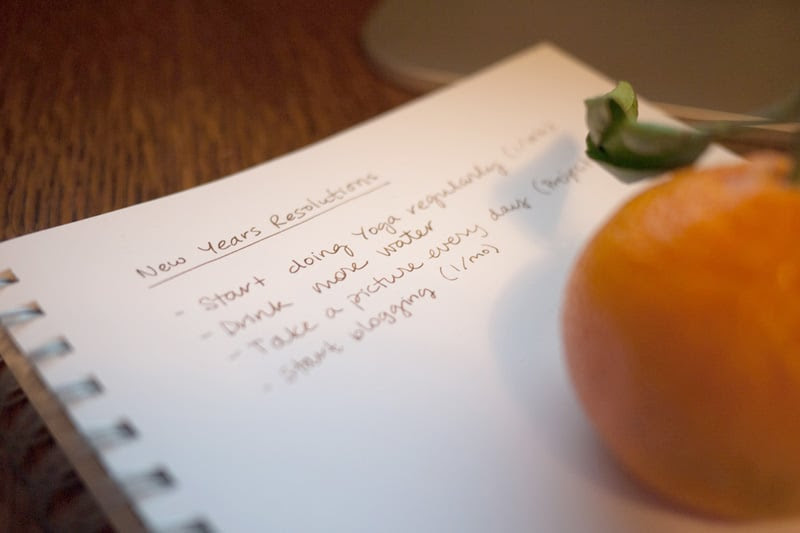
Think about what you want for 2018 and set them as goals. Here is a
list to kickstart your thinking process. Of course, goal setting isn't
restricted to the start of the year — you can do that anytime. There's
never a 'best' time to set goals — the best time is now.
Take up a class of your interest
(dancing, singing, rollerblading, ice skating, swimming, photography,
web design, coding, guitar, yoga, Pilates, etc.)
As we hurtle towards the season of gluttony and indulgence. I found thus little ditty. Hope you like it. To be sung of course by a full choir.
THE TWELVE DAYS OF CHRISTMAS
On the first day of Christmas, my true love said to me, I’ve bought a big fresh turkey, and a proper Christmas tree.
On the second day of Christmas, much laughter could be heard, As we tucked into our turkey, a most delicious bird.
On the third day of Christmas, came the people from next door, The turkey tasted just as good it did the day before.
On the fourth day of Christmas, some wine and cheese we had, We were bright and happy, the turkey a little sad.
On the fifth day of Christmas, outside the snowflakes scurried, But we were nice and warm inside, we had the turkey curried.
On the sixth day of Christmas, the Christmas spirit died, The children fought and bickered so we had the turkey fried.
On the seventh day of Christmas, my true love he did wince, When he sat down at the table, and was offered turkey mince.
On the eight day of Christmas, the dog has run for shelter, He had seen our turkey pancakes, and the glass of Alka-Selzter
On the ninth day of Christmas, by lunch time Dad was blotto, He knew the bird was back, this time as rice risotto.
On the tenth day of Christmas, we were drinking home-made brew, As if that wasn’t bad enough we were eating turkey stew.
On the eleventh day of Christmas, the Christmas tree was moulting, With chili, soya and oyster sauce, the turkey was revolting.
On the twelth day of Christmas, we had a smile on our lips,
The guests had gone, the turkey too, and we dined on fish and chips.
When someone is rude to you, it can
be hard not to get upset. Your initial reaction is often to make a
cutting retort. However, if you resist the temptation to lose
self-control and get angry, you will be able to respond to inappropriate
comments without having to stoop to their level. Check out the five
simple phrases that can instantly disarm rude people below: “Thank you”
Saying “thank you” might sound like a
simple gesture, but you will be surprised to find that it can quickly
change the course of the conversation. “Thank you” is a phrase we often
use to show appreciation, if you say it to someone who is being rude to
you, it can show them that you’re not angry. Rude people enjoy when
others get angry and become impolite back. If you bite your tongue and
remain polite, it means that you acknowledge the person’s rudeness, and
have chosen not to let their behaviour affect you.
“You’re right”
Most people have a hard time
accepting someone else’s point of view. If there happens to be some
truth in what the person is saying use this phrase and it will stop the
person in their tracks. The conversation will be cut short and this
means that there is less chance of the discussion developing into the
argument.
“You’re hurting my feelings” If
you want to get through to the person, you might need to explain to
them that they are hurting you. Sometimes this is the best way to let
them know that you don’t like what they are saying and that it offends
you. In some instances, they may not know how their words are affecting
you, so if you speak up they may be able to correct their behaviour and
apologise. Using this phrase could also protect you from inappropriate
and rude remarks in the future.
“I think we should stop this conversation now” Unfortunately,
rude people don’t always care who they are hurting. If you make your
feelings to them known and it doesn’t stop them, this phrase will. Using
this phrase will signal to them that you no longer appreciate the
conversation and that you don’t want to tolerate their rude behaviour.
Hopefully, the other person will think twice about saying something
offensive next time. “You always have something negative to say, don’t you?”
This
phrase can also help the other person to reassess their behaviour and
think about the words that are coming out of their mouth. By drawing
attention to the fact that they often have a negative response, you are
highlighting their negative behaviour and this may help them to
reconsider what they say in the future.
There
are many things that you can do to become a better person. You can
work hard, exercise, and eat well for example. All of these things are
great, no question about it. However, in my opinion, becoming a better
person starts with being selfless. Doing good deeds for other people
without expecting to gain from it is one of the most rewarding
experiences that one can feel in a lifetime. Becoming a truly better
person begins with giving outwardly. I’ve come up with this challenge:
7 days to becoming a better person.
Each day you do something selfless, that will not even take more than
a few moments of your time, and experience first hand what it feels
like to transform into a genuinely great person. Here’s the challenge:
Day 1 – Tell someone you love them
So many people out there never take the precious time to express how
they feel to the ones that are truly important in their life.
Expressing your love shouldn’t be seen as taboo or a sign of weakness.
It’s a sign of confidence, and an expression of what you really feel.
There is nothing more amazing than to know that someone loves you. On
this first day of the challenge, choose someone in your life to make
them feel that special feeling. It’s very simple, just sit them down
and say something along those lines: “You know I don’t say this
often enough but I do appreciate our bond and everything that you do for
me. So I just wanted to tell you that I love you…I wanted you to know
that.” In two minutes, you have made someone’s day….forget day,
you’ve made their month! So pick a spouse, a parent, a sibling, a
friend….anyone that you truly care about and say the magic word. You
may get a little nervous just before, but once you say it, I guarantee
you that you will feel amazing. Yes, becoming a better person is not a
chore….it actually feels great! Day 2 – Open your ears and listen
Everyone has their share of issues that they deal with on a daily basis.
We all at some point need to be heard. We need to get things out and
just blow some steam. Unfortunately, the art of listening is fading
away. It’s becoming more and more of a struggle for people to find a
good pair of ears to vent off to. So on day 2 of your quest to becoming
a better person, you simply have to be there for someone close to you.
That’s all you have to do. Listen to them. Let me tell you, I do this
all the time with my friends. I make myself available for them and I
just listen. You wouldn’t believe how it makes them happy to have
someone listen to them. No opinions, no judgment. Listen
unconditionally. You may not have realized the power of listening yet,
but this exercise will prove it to you. It can make a tremendous
difference in someone’s life, and it’s one of the best gifts you can
give anyone. Day 3 – Apologize
We all have made certain mistakes. We’ve all done things we regret.
Unfortunately, the majority of the time, we never take the opportunity
to make things better, perhaps out of pride or ego. So we carry this
along with us. Sure, with time, its impact may fade a little, but there
is a much more powerful method to deal with such situations. On day 3,
it’s time for you to swallow your pride and apologize. Look into your
past. Is there a particular person that you have lost touch with or
haven’t spoken to in a while? Regardless of what happened, this is not
the time to decide who was right and who was wrong. This is about
healing a wound. Apologizing is not an admission that you were wrong.
On the other hand, it is proof that you are confident enough to say it.
This act will not only make the other party feel much better, it will
inspire them. So by being the “bigger person” and apologizing, you
create nothing but positive energy all around. This is as rewarding for
you as it is for that other person.
Day 4 – Give away a valuable
Nowadays, the only time people give each other anything somewhat
meaningful is on birthdays and holidays. What about the other
360-something days of the year? Simply giving contains so much power in
and of itself. This is why on day 3, you will choose something
meaningful that you will give to someone that you know will like it
and/or benefit from it. It must be something in your home, that you
already own. Perhaps a painting, or a book. Something that you hold
dear and that will bring happiness and value to the person you choose to
give it to. You see, sharing your wealth is one of the best ways to
prove how much you care and necessary to becoming a good person. These
types of gifts are so much more powerful than anything given on
birthdays or holidays, because it shows that you gave it because you
wanted to, not because you had it. This brings a whole new meaning to
that gift and will make the person appreciate it even more! Day 5 – Volunteer your time
The first few days, you have given back to the people close to you, but
now, it is time to take this further than the comfort of your own
surroundings! Giving back to your community and your society is just as
important, and an integral part of making everything as a whole, a much
better existence for all involved. On day 5, it is time for you to
give some of your time away. It doesn’t have to be complicated. You
can volunteer your time helping out at your children’s school, or at a
local community center for example. It doesn’t have to be a full day or
many hours. Volunteer the time that you can. What I mean is that
instead of watching tv or surfing the web for example, take some of that
time and do something that will help contribute to the development of
your community. Ask around, could be something at work or related to a
particular activity that you do. Nobody refuses a helping hand and
everyone benefits out of it Day 6 – Help out a stranger
So many people out there could use the help of some good people. After
all, we are all humans and we should stick up for one another. I’ve
always been amazed by stories of complete strangers risking their life
to help a fellow human being. If we can just help anyone with a
fraction of such a commitment, then we’ve all made a difference. On day
6, it’s time to do a kind gesture for a total stranger. Could be
helping an elderly person with their bags, or helping a kid cross the
street, there are so many tiny gestures that we can do in our daily life
to help others it’s incredible. When you see a car break down on the
side of the road, most people drive by, thinking that help is on the way
or that someone else will stop. How about you become the person that
stops? How about you become the person whose gesture makes a total
stranger’s day? This is your opportunity to showcase how a good-hearted
person reacts in such situations for the greater good of all involved. Day 7 – Donate
The world is a big place, but in the end, we are a tiny community in the
vastness of the Universe. All we have is each other. Although they
may not live nearby, there are so many people around the world that need
the assistance of good natured people. On this final day, it is time
to take your good deeds global! There are tons of really good charities
and organizations across the globe that make it their goal to help out
those that are in need. Pick any organization about any particular
cause that you may hold dear to your heart, and provide them with a
donation. The internet makes it really easy now to find such
organizations, so this final step is super simple and quick to complete.
Donate whatever you can. The amount is not important. What is
important is that even though your gesture was simple and quick, the
difference it will make will resonate with far greater significance in
the grand scheme of things.
So there you have it! 7 days and a better you comes out of it. As a
matter of fact, if you have noticed, in becoming a better person, you
have affected the lives of so many different people in such positive
ways. With such small gestures each day, you have made a difference in
your life as well as in other people’s, and that is what becoming a
better person is all about. You may find that after these 7 days, you
have now developed a habit and that you will continue each and every day
to give back. If you have created a “momentum” of doing good deeds and
that it will keep on going, then I have done my work. This can indeed
become life changing! So you have the challenge and I would love to
hear what you all have done and how it’s impacted your life and those
around you
Being extraordinary doesn’t just happen. Doing something
amazing isn’t an accident. Living an extraordinary life doesn’t come
naturally.
What comes naturally is to just be ordinary.
And that is how most of us stay. Ordinary. Average. Mediocre. Active yet ineffective. Moving… but not toward our dreams.
Being ordinary is a bad plan. Pursuing the path of least resistance
means high-grade mediocrity and close-but-not-quite-there results.
Mediocrity is an effecting (and frustrating) villain. It is neither
crashing defeat nor breathtaking failure. But a slow, soul-sucking
poison. A silent assassin.
One minute you’re standing on top of the world. The next you’re at
the bottom of the heap, scratching your head and wondering what
happened. You’ve completely lost your mojo. And you’re not even sure how
you got to this awful place called mediocrity. And more than anything
else, you want your mojo back. You want that confidence, that feeling of
control, that ability to perform at high levels.
You want to do more, be more.
There is a word for that. A word to describe something that transcends mediocrity. A word that communicates “more than average.” Extra-ordinary.
Not ordinary. Something extra.
But how does extraordinary happen?
Extraordinary starts with you—perhaps an ordinary person at an
ordinary job doing ordinary things on an ordinary day. No special
advantages. No remarkable skills that can’t be duplicated. No large bank
account. Just all-around “ordinary.”
Then, you decide to do something extra. To be something extra.
Something a lot-a-bit extra. And not just one time. But day after day
after day.
And then one day, everyone watching you will notice that “ordinary”
is no longer an accurate description for the person you have become.
For what you have done. And they will shake their heads and remark that
what they have seen is extraordinary. Because it was. And because you
will be.
And that’s how extraordinary happens.
By not being satisfied with ordinary. By being vigilant. Being obsessed. No excuses. Just a relentless focus on being better.
It’s deciding to go the extra mile when the last mile was hard
enough. It’s controlling your mind in spite of the obstacles ahead.
It comes down to this really simple thought: If you don’t make time
to pursue being extraordinary, then you’ll never experience true
greatness. All you’ll ever know is mediocrity.
You’re already making time to be average and ordinary.
Why not choose to be extraordinary?
Neuroscientists Strongly Recommend That You Visit The Beach Regularly. Here’s Why:
We all know that spending time outdoors is good for you
on both a physical and mental level, but the benefits of spending time
specifically at the beach have just been revealed.
That incredible feeling of peace and calmness that you experience at
the beach is now being referred to as “blue space.” That’s what
scientists have dubbed the effect that the combination of soothing
smells and sounds of water have on your brain. The blue space is enough
to make you feel at ease in a hypnotic sort of way.
When you notice how relaxed you feel at the beach, it’s not just all
in your head. Science says that it’s a change in the way your brain
reacts to its environment leaving you feeling happy, relaxed and
reenergized. Overall, this blue space effects you in four different ways.
1. Going to the beach reduces stress
Water is nature’s cure to life’s stressors. It’s full of naturally
occurring positive ions that are known for having the ability to make
you feel at ease. So whether you jump in for a swim or simply dip your
toes in the water, you’re sure to experience a feeling of relaxation.
That’s one instant mood booster we could all use from time to time!
2. The beach boosts your creativity
Feeling like you’re in a creative rut? Well, scientists now believe
that the solution to this is the beach. Being in blue space allows you
to clear your head and approach problems or projects in a more creative
way. Much like meditation, the beach triggers a feeling of calmness that
allows you to tune everything else out and reflect on what it is you’ve
been needing to focus on.
3. Going to the beach can help reduce feelings of depression
Much like the effects that the beach has on feelings of stress and
creative ruts, the beach also provides some relief to feelings of
depression. The hypnotic sound of the waves in combination with the
sight and smells of the beach can put you into a meditative space. In
turn, you can clear your mind and reflect on life in a safe space away
from the chaos of your daily life.
4. Overall, spending time at the beach will change your perspective on life
And that perspective is going to change for the better! Nature in
general has always been a factor in healthy happy lives, but the beach
in particular is so good for the soul.
So grab the SPF and pack a picnic, because it’s time to head to the beach!


 (Image:
  By
By 


